
216digital.
Web Accessibility

ADA Risk Mitigation
Prevent and Respond to ADA Lawsuits


WCAG & Section 508
Conform with Local and International Requirements


a11y.Radar
Ongoing Monitoring and Maintenance


Consultation & Training

Is Your Website Vulnerable to Frivolous Lawsuits?
Get a Free Web Accessibility Audit to Learn Where You Stand
Find Out Today!

Web Design & Development

Marketing

PPC Management
Google & Social Media Ads


Professional SEO
Increase Organic Search Strength

Interested in Marketing?
Speak to an Expert about marketing opportunities for your brand to cultivate support and growth online.
Contact Us

About

Blog

Contact Us
  • Email Accessibility Tips for Better Newsletters

    Email Accessibility Tips for Better Newsletters

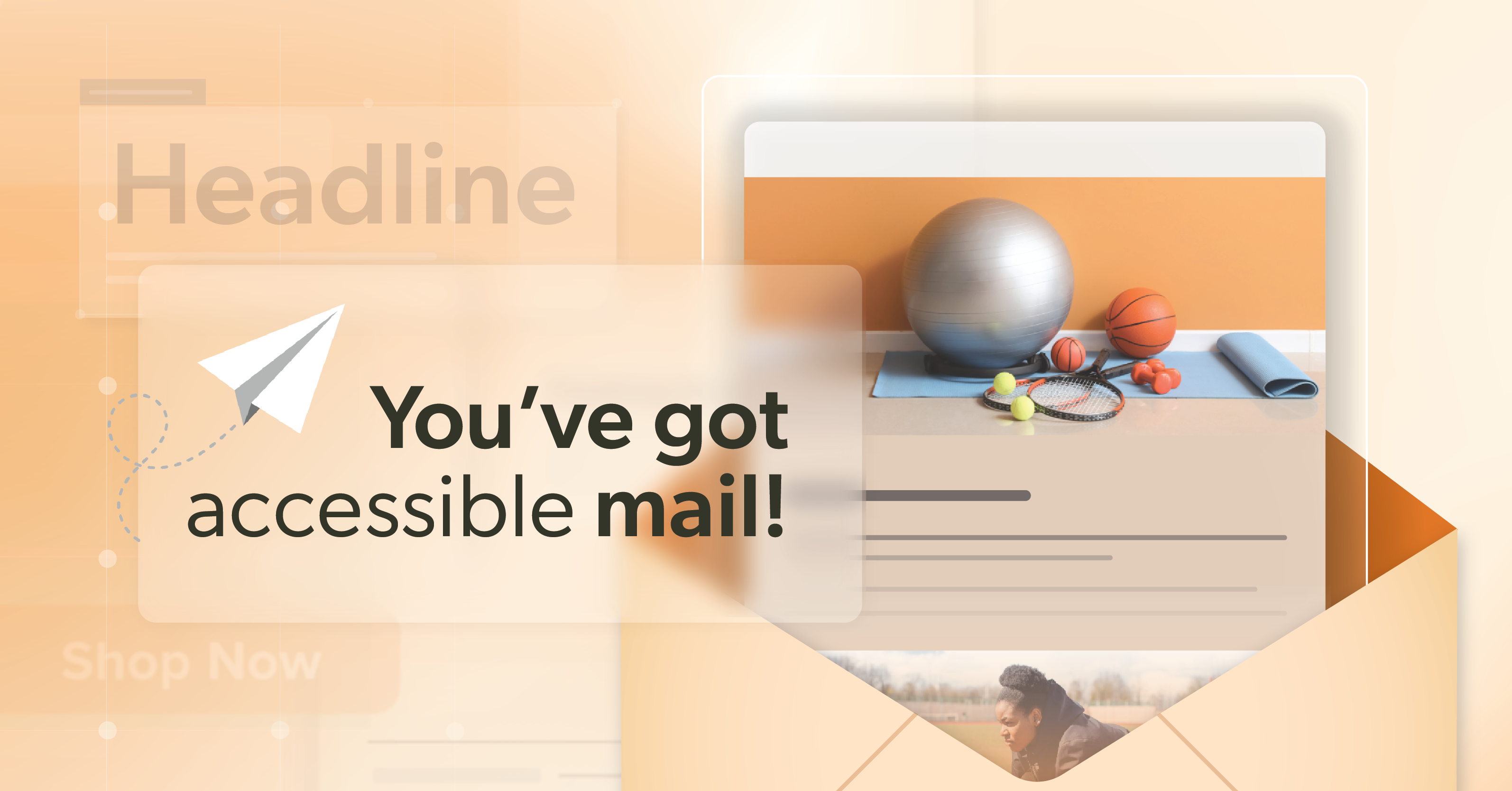
    Newsletters are still one of the most personal ways to reach people online. They share updates, spark interest, and keep relationships going—all right there in your reader’s inbox. Once the design looks polished and the list is ready, it’s easy to feel like the work is done.

    But even the best-looking email can fall short for someone using a screen reader. A missing heading tag, a jumbled reading order, or an unlabeled image can make a message that feels seamless to one person confusing to another.

    Email accessibility often gets left behind—not because people don’t care, but because it’s easy to think of it as something separate from web accessibility. In truth, it’s all connected. The same principles that make your website inclusive—clear structure, descriptive alt text, and meaningful markup—apply just as much to your emails.

    An accessible email isn’t a bonus feature. It’s a sign of good communication: thoughtful, professional, and built for everyone.

    The steps below show how to bring accessibility into your process naturally, without slowing your team down or changing the way you already design and send.

    Start with a Strong Foundation

    Every accessible email starts with clean, well-structured HTML. A simple one- or two-column layout works best. Multi-column or grid-heavy designs may look great on desktop but can become confusing when read aloud or viewed on mobile.

    Keep your code organized so it flows naturally from top to bottom, left to right. When your layout collapses for smaller screens, content should still read in a logical order.

    Use semantic markup to structure content:

    • <h1>, <h2>, and <h3> tags for headings
    • <p> tags for paragraphs
    • Avoid using styled <div> elements to imitate headings or sections

    If you rely on tables for layout, apply role="presentation" so assistive technologies don’t interpret them as data tables. And try to keep navigation minimal—five or six identical header links can feel repetitive for someone navigating by keyboard or screen reader.

    Finally, test your message with images turned off. Many email clients block images by default, so make sure your message still makes sense when visuals are missing.

    Make Links and Buttons Clear and Consistent

    Screen reader users often jump between links to navigate quickly. That’s why each link should make sense on its own.

    Instead of vague prompts like “Click here” or “Learn more,” use language that describes the action:

    • “Download our June 2025 Report”
    • “View featured products”
    • “Register for our next webinar”

    For buttons, stick to properly coded <a> tags styled with CSS. If you’re using nonstandard elements, include role="button" and test keyboard functionality. Avoid relying on image-based buttons without text alternatives or ARIA labels.

    A few more details to keep in mind:

    • When a link opens a page, make sure focus lands in a logical place—at the top or at a key heading, not mid-page.
    • Treat unsubscribe and preference links as essential navigation elements. They should be easy to find, clearly labeled, and fully accessible.

    Communicate Without Relying on Vision

    Images, icons, and videos make emails engaging, but they shouldn’t be the only way you communicate.

    • Add descriptive alt text to every meaningful image.
      • Example: <img src="banner.jpg" alt="50% off sale ends July 31">
    • For decorative visuals, use empty alt text (alt="") so screen readers skip them.
    • Never put important text—like “Register Now” or event details—inside an image unless that information also appears as live text.

    If your email includes video or audio, make sure there are captions, transcripts, and accessible controls. Avoid autoplaying media; it can disrupt assistive technology users.

    And once again—preview your message with images blocked. It’s one of the simplest ways to catch email accessibility issues before you hit send.

    Keep Tables Simple and Purposeful

    Tables are sometimes necessary, but they can quickly complicate email accessibility if used carelessly. Before adding one, ask: Could this be a list instead?

    If you truly need a data table:

    • Use <th> tags for headers
    • Identify rows and columns properly
    • Avoid merged or nested cells, which confuse screen readers

    When a table is only for layout, mark it with role="presentation". In most cases, modern spacing and stacking techniques can replace layout tables without losing visual balance.

    Prioritize Readability in Typography and Contrast

    Readable text helps everyone—not just users with disabilities.

    • Choose simple, widely supported fonts like Arial, Helvetica, or Calibri.
    • Set body text at 14–16 pixels with line spacing around 1.4–1.5 for comfort.
    • Left-align paragraphs rather than centering or justifying them.
    • Maintain color contrast ratios of at least 4.5:1 for body text.

    Avoid using color alone to convey meaning. Pair color cues with icons, labels, or underlines. Use emoji and symbols sparingly—they can sound awkward when read aloud by screen readers.

    Leave breathing room between sections, and test your email in dark mode to confirm text and background colors remain readable. These small checks can make a big difference in overall legibility.

    Reduce Friction with URLs and Attachments

    Accessibility isn’t just about visuals—it’s about ease of use.

    • Replace long, exposed URLs with descriptive links.
    • If you must include a raw link, place it on its own line for clarity.
    • Ensure attachments like PDFs are tagged and labeled 
    • Summarize key information within the email body when possible, so users don’t need to download a separate file.

    Always include a plain-text version of your email for users relying on text-only clients or low-bandwidth connections.

    Even your subject line and preview text play a role in accessibility. These are the first things a screen reader announces, so be specific:

    Instead of “July Newsletter,” try “July Updates: Accessibility Toolkit and Webinar Dates.”

    Test as a Natural Part of Your Process

    Testing shouldn’t feel like a separate task—it should be part of your regular workflow for email accessibility.

    Before sending, confirm that:

    • Headings follow a logical hierarchy
    • All images include alt text
    • Links are descriptive
    • Contrast meets WCAG standards
    • The message reads naturally with images turned off

    Check how your email performs in multiple clients—Outlook, Gmail, Apple Mail—and on different devices. Then, try it with a screen reader like NVDA, JAWS, or VoiceOver. Notice whether headings make sense, focus moves predictably, and buttons behave correctly.

    Other valuable tests:

    • Navigate using only your keyboard
    • Zoom in to 200% and ensure the layout still holds together
    • Ask teammates or testers who use assistive tech for feedback

    Automated tools can flag issues like missing alt text or low contrast, but human review ensures quality. Once testing becomes routine, email accessibility starts to feel natural—not like an extra step, but part of how you craft great communication.

    Email Accessibility: The Message Everyone Can Read

    Accessibility works best when it’s built in, not added at the last step. When your structure is clear, headings are properly marked, alt text is descriptive, and links communicate purpose, your message feels effortless—no matter how someone reads it.

    That’s what email accessibility really delivers: communication that’s consistent, inclusive, and easy for everyone to engage with. It’s not extra work; it’s smarter work that helps your team create better results with less rework and greater reach.

    If you’re ready to strengthen that process, 216digital can help. Schedule an ADA briefing, and we’ll walk through your templates, review your workflow, and show you how to make email accessibility a seamless part of every campaign you send.
    Greg McNeil

    November 12, 2025
    How-to Guides
    Accessibility, email accessibility, How-to, Web Accessibility, Website Accessibility
  • Email Accessibility: Make Every Click Count

    Email Accessibility: Make Every Click Count

    You spend hours testing subject lines, analyzing open rates, and crafting the perfect call to action. But if your emails are not accessible, you may be unintentionally excluding millions of potential readers. More than one billion people around the world live with some form of disability, and many rely on assistive technologies such as screen readers, magnifiers, or keyboard navigation to interact with digital content. This is why email accessibility should be at the center of every campaign you send.

    This is where email accessibility makes a difference. Accessible emails do not only support people with disabilities; they also improve reach, engagement, and usability for everyone. You can think of accessibility as a safety net during your quality assurance process, one that helps make sure your hard work actually reaches its audience. The encouraging part is that small and thoughtful changes can create a big impact.

    Structure and Layout: Design for Navigation, Not Just Aesthetics

    Attractive design may catch the eye, but structure is what allows readers to move through your message with ease. Using semantic heading tags such as <h1>, <h2>, and <h3> helps organize your content in a way that screen reader users can understand. Headings should flow in a logical order without skipping levels. Relying on bold text or font size alone to show importance does not provide the same clarity.

    Tables are another common issue. They should be avoided for layout purposes whenever possible because screen readers can misinterpret them. If a table must be used for structure, adding role="presentation" tells assistive technology that it is decorative rather than data.

    It is also important to test your emails using only the Tab key. If you cannot reach every link, button, and input field by tabbing through the message, your subscribers will face the same problem.

    Image Accessibility: More Than Just Pretty Pictures

    Images are powerful in marketing emails, but without the right preparation, they can create barriers. Every image should include descriptive alt text that explains its purpose. If the image is decorative and does not add meaning, use empty alt text so that screen readers can skip it.

    Critical information, such as discount codes or calls to action, should never exist only within an image. Live text ensures that the message still appears even if images are turned off in the inbox. A good test is to disable images and see whether the email still conveys your intended message.

    Animations also require care. Flashing or strobing content can cause serious discomfort or even seizures for some readers. Autoplaying GIFs may distract from your main message. Whenever possible, give users the ability to pause or stop moving elements.

    Links and Calls to Action: Clear, Clickable, Inclusive

    Calls to action are where engagement happens, and they must be designed with clarity in mind. Instead of vague text such as “Click here,” choose phrases like “Read the full guide” or “Shop the new collection.” Screen reader users often move through an email by jumping between links, so each one needs to make sense on its own.

    Links should always be visually distinct. Underlining them is the best practice since relying on color alone is not effective for people with color blindness. Buttons and links should also be large enough to tap easily on a mobile device. A minimum size of about 44 by 44 pixels provides enough room for users with limited dexterity. Spacing links apart reduces the chance of misclicks. These adjustments not only improve email accessibility but also increase click-through rates by making the experience smoother for everyone.

    Copywriting and Readability: Make Every Word Count

    Email accessibility applies to words as much as to code or design. Short and direct sentences help readers understand quickly. Breaking your content into smaller paragraphs with clear subheadings makes the email less overwhelming.

    Avoid heavy jargon or insider language that may confuse people. Simple words in everyday language travel further and faster. Writing in an active voice also helps keep your copy engaging.

    Do not forget the basics of text styling. Font sizes should be at least 14 points, which is especially important for people with low vision or anyone reading on a small screen. Text should be left-aligned only, since centered or justified alignment slows down reading speed and can reduce comprehension.

    Multimedia Content: Do Not Skip the Captions

    Many email campaigns now include video, audio, or GIFs. These can make content more dynamic, but they bring accessibility challenges that need attention. Any video or audio clip should come with captions or transcripts. Captions are essential for people who are deaf or hard of hearing, but they also help people who are in noisy environments or those who are somewhere quiet and cannot turn on the sound.

    Animated GIFs should avoid flashing sequences or rapid loops. If movement is key to your message, include a description of it in the email copy or offer a static fallback image. Multimedia can be powerful, but it should never come at the expense of accessibility.

    A Pre-Send Accessibility Checklist

    Before you hit send, it helps to run through a quick accessibility check. Try navigating the email with only your keyboard. Make sure every image includes descriptive alt text or an empty alt attribute if it is decorative. Look at your link text and ask if it clearly describes the action or destination. Turn images off and check if the message still makes sense. Confirm that your color contrast is strong enough to read comfortably. Review your animations to see if they are subtle and under control. Lastly, read the text on both desktop and mobile screens to confirm that the font size is easy to read.

    These checks only take a moment, but they can prevent frustration and lost engagement.

    Accessibility Is a Long Game, but Every Email Helps

    No email will ever be perfectly accessible. The goal is not perfection but progress. Each improvement you make expands your reach, improves engagement, and builds trust with your audience.

    Email accessibility is not only about legal compliance. It is also about creating meaningful connections. By removing barriers, you ensure that your message reaches as many people as possible and resonates more deeply with them. Making email accessibility part of your long-term strategy strengthens both your brand reputation and the experience of every subscriber.

    The next time you prepare a campaign, add accessibility to your checklist. Treat it as part of your workflow, not an extra chore. An inaccessible email is never as effective as it could be.

    If you need a clear plan for accessible digital communication, schedule an ADA briefing with 216digital. We will walk you through practical steps to make your email campaigns and your digital presence more inclusive, more effective, and better prepared for the future.

    Greg McNeil

    August 12, 2025
    How-to Guides, Legal Compliance
    Accessibility, email accessibility, WCAG, WCAG Compliance, Website Accessibility
  • Email Accessibility: Why It Matters for Your Marketing

    Did you know that many marketing emails are nearly impossible for some people to read? It’s true! People with disabilities, especially those who use screen readers, often struggle with text that isn’t coded properly or images that don’t have any descriptions. The good news is that email accessibility is simpler than you might think. In this article, we’ll explore why emails can be hard to read for people with disabilities, why you should care, and how you can start making changes today. Let’s dive in!

    Why Accessibility in Emails Matters

    You might be wondering, “Why should I think about email accessibility?” There are two big reasons:

    1. Reach More Readers: Accessibility helps you connect with a larger audience, which means more potential customers.
    2. It’s the Right Thing to Do: Many people rely on screen readers or special settings to read their messages, and they deserve the same great experience as everyone else.

    Plus, consider this: There are about 61 million adults in the United States alone who have disabilities, and over one million of them are blind. Emails that aren’t accessible can stop them from reading newsletters, buying products, or joining your events. By focusing on accessibility, you’re ensuring everyone can connect with you.

    The Business Case for Accessible Emails

    You might ask, “Why should I spend my time on email accessibility?” Here are three compelling reasons:

    1. Stay Legally Compliant: Laws like the Americans with Disabilities Act (ADA) may apply to online communication. Staying compliant avoids potential legal issues.
    2. Expand Your Audience: People with disabilities make up a significant group. Including them ensures your message reaches more people.
    3. Improve Content for Everyone: Accessible content benefits all users. For example, larger fonts are easier on the eyes, and descriptive link text helps people skimming emails on their phones.

    In short, email accessibility isn’t just nice to have — it’s a smart move that can boost your brand and prevent legal headaches.

    Why Marketing Emails Tend To Be Inaccessible

    Let’s be honest: emails can be tricky. Here’s why:

    • They Rely on Tables for Layout: Modern web pages use advanced CSS layouts, but many email clients don’t support them. This forces developers to use tables, which can confuse screen readers if not coded correctly.
    • Limited Support for Buttons: Real <button> elements often aren’t supported. Replacing buttons with images can create accessibility issues if the images lack descriptions.
    • Drag-and-Drop Tools Aren’t Perfect: Email builders like Mailchimp or HubSpot can generate messy or incomplete HTML code, leading to hidden accessibility problems.

    These challenges make email accessibility tricky, but don’t worry. With a few simple steps, you can overcome these issues.

    Building an Accessibility Checklist for Emails

    Here’s a simple checklist to help you make your emails more accessible:

    Template Setup (One-Time Fixes)

    1. Add role=”presentation” to Tables: This attribute tells screen readers to ignore table structure, reducing confusion.
    2. Underline Inline Links: Don’t rely on color alone to indicate links. Use underlines to make them easily identifiable.
    3. Avoid Using One Big Image as Your Email: Screen readers can’t interpret a single large image. If images are disabled, subscribers will see an empty box instead of your content.

    Campaign-Level Fixes

    1. Add Alt Text to Every Image: Alt text provides descriptions for images. Keep it brief but clear (e.g., “Model wearing a red winter jacket”).
    2. Use Semantic HTML Elements: Use <h1> for main headings, <h2> for subheadings, and <p> for paragraphs to help screen readers understand content structure.
    3. Use Descriptive Links: Replace vague link text like “Click Here” with “View our winter jackets” to provide context.

    Testing and QA for Your Accessible Emails

    How can you ensure your emails are accessible? Test them!

    Manual Testing

    Use free screen readers like NVDA (Windows) or VoiceOver (Mac) to hear how your email sounds. Listening to your email read aloud is a great way to catch problems.

    Automated Testing Tools

    Use tools like Google Lighthouse or WAVE to scan your email’s web version for issues. Publish a temporary version, get the URL, and analyze it for errors.

    A/B Testing

    Test different versions of your accessible emails to see what resonates best with your audience. Compare engagement metrics to measure the impact of accessibility.

    Accessibility Best Practices for Email Design

    Here are additional tips for email accessibility:

    1. Make It Mobile-Friendly: Ensure text, buttons, and layouts work well on smaller screens.
    2. Choose Readable Fonts and Colors: Use high contrast (e.g., black text on a white background) and avoid tiny fonts.
    3. Avoid Flashing or Moving Text: Fast-moving elements can be challenging for some users. Use animation sparingly.

    Encouraging a Culture of Accessibility

    Once you start focusing on accessibility, share your knowledge with your team:

    1. Offer Mini-Trainings: Show marketing and design teams how to add alt text or check code for issues.
    2. Collaborate with Developers: Work with your development team to address tricky code problems.
    3. Celebrate Wins: Highlight successful accessible campaigns during team meetings to encourage continued focus.

    Conclusion

    Email accessibility matters because it helps people with disabilities, grows your audience, and enhances your brand’s reputation. The best part? It doesn’t have to be complicated. With simple steps like adding alt text, using descriptive links, and making your designs mobile-friendly, you can create emails that everyone can enjoy.

    Take a moment to review your next email draft. Is there alt text? Are links descriptive? Are fonts readable? If so, you’re already ahead of many marketers. Keep going, and soon accessibility will become a natural part of your email marketing process, benefiting both your audience and your brand

    Greg McNeil

    January 3, 2025
    How-to Guides, The Benefits of Web Accessibility
    Accessibility, email accessibility, How-to, Web Accessibility, web developers
216digital Scanning Tool

Audit Your Website for Free

Find Out if Your Website is WCAG & ADA Compliant


    216digital Logo

    Our team is full of expert professionals in Web Accessibility Remediation, eCommerce Design & Development, and Marketing – ready to help you reach your goals and thrive in a competitive marketplace. 

    216 Digital, Inc. BBB Business Review

    Get in Touch

    2208 E Enterprise Pkwy
    Twinsburg, OH 44087
    216.505.4400
    info@216digital.com

    Support

    Support Desk
    Acceptable Use Policy
    Accessibility Policy
    Privacy Policy

    Web Accessibility

    Settlement & Risk Mitigation
    WCAG 2.1/2.2 AA Compliance
    Monitoring Service by a11y.Radar

    Development & Marketing

    eCommerce Development
    PPC Marketing
    Professional SEO

    About

    About Us
    Contact

    Copyright 2024 216digital. All Rights Reserved.